Solar panel installation in Devon that starts with your home.
More panels do not make a better system. The best one uses your roof sensibly and matches how your household actually uses electricity. We assess the property, design the array around usable roof space, and show what the proposed system should generate before you decide anything. The VAT relief, currently zero for solar and battery installs, runs until 31 March 2027.
No obligation. Finance and no-upfront options can be discussed with your proposal.
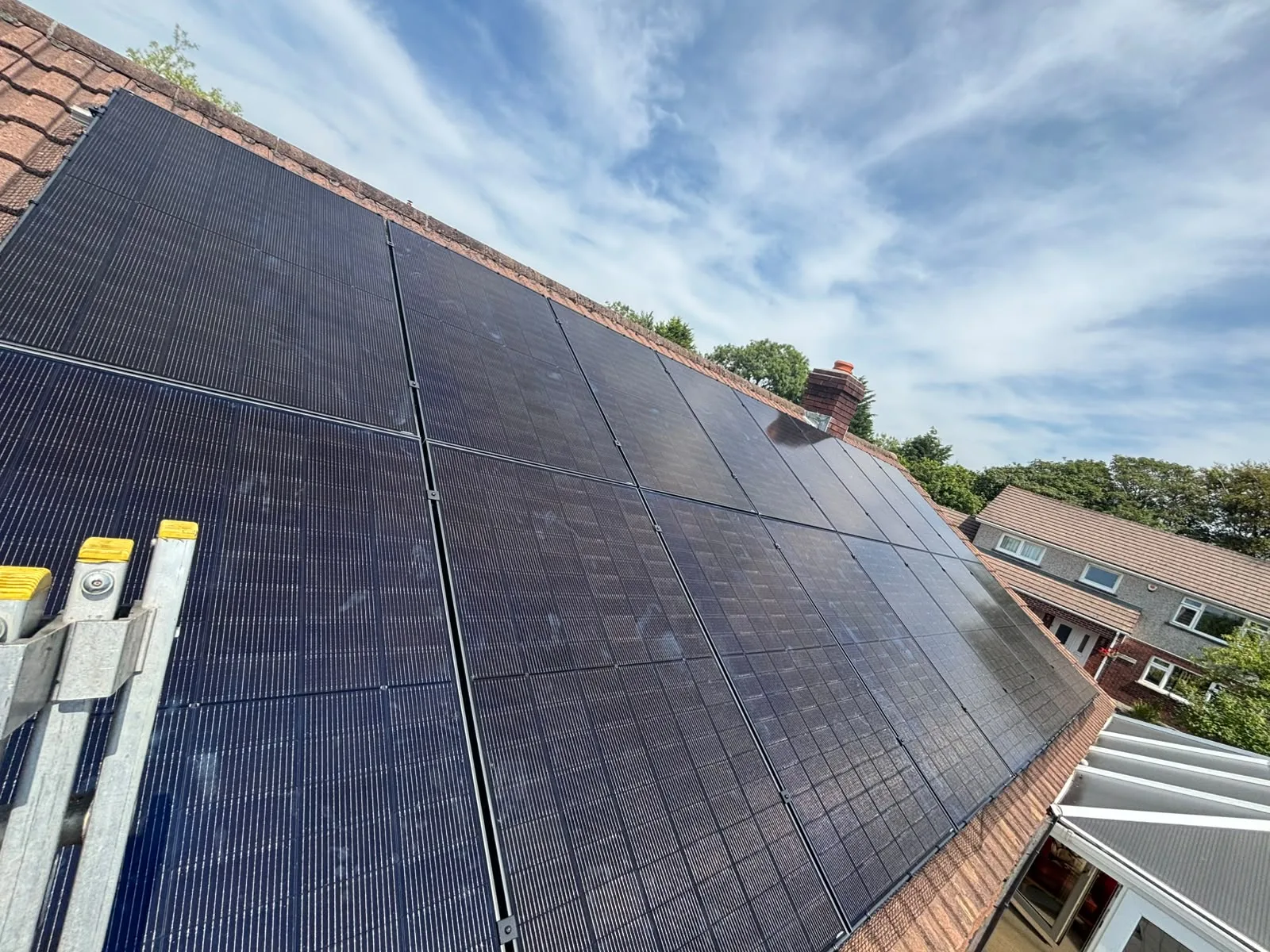
Roof-mount or ground-mount, sized properly.
The great majority of the systems we fit in Devon go straight onto the roof, since it’s the simplest option and doesn’t eat into garden space. Where a roof is too shaded, badly oriented or structurally unsuitable, we’ll look at a ground-mounted array instead. Which one suits your property is a survey decision, not something we assume before we’ve seen the roof.
Peak generation happens in the middle of the day, which for a lot of working households is exactly when the house is empty. Adding battery storage means that daytime generation doesn’t just get exported at a low rate, it’s there waiting for you that evening.
What solar panels actually change for your electricity bill.
Your panels generate electricity whenever there’s usable daylight. Your home uses that electricity first, so every unit used directly is one you don’t need to buy from your supplier.
Grey Devon days still produce power. Output shifts with weather and season, so we judge what a system should generate across a full year, not on one sunny afternoon. A battery can keep some spare daytime generation for the evening.
The number that matters isn’t Devon’s average sunshine figure. It’s what your roof, your proposed system and your own electricity use could mean for your bill. There’s more on how that works on our Why Solar in Devon page.
String inverters
A single inverter handling the entire array. Cheapest option on the table, and fine if your roof has no shading issues to work around.
Microinverters
Each panel gets its own small inverter, adding roughly £200–£500 to the system cost. Worth it on a multi-aspect or partly-shaded roof, since one shaded panel won’t drag the rest of the array down with it.
Hybrid inverters
Designed with battery integration in mind from the outset. If a battery is anywhere in your plans, now or down the line, this is normally the sensible starting point.
What ongoing maintenance actually involves.
With nothing mechanical to wear out, panels need little attention. Check now and then for debris, moss or bird mess, and let rain do the rest. Manufacturers typically guarantee performance for 25 years or longer, with a separate, shorter product warranty and our workmanship cover, and the quote confirms exact terms, as they differ by manufacturer.
If anything gets replaced over a system’s lifetime, it’s usually the inverter, string inverters typically run 10–15 years before needing swapping out. We’ll set expectations on inverter lifespan for your specific setup when we quote.
How do solar panels actually work?
Photovoltaic cells, nowadays monocrystalline silicon on nearly every home we fit, produce direct current as soon as daylight reaches them. Direct sun is not needed, so a grey Devon afternoon still generates at a reduced rate. The inverter then turns that DC into the AC your sockets and appliances use.
How long does installation take on site?
Most homes are done in a day, and larger arrays or trickier roofs sometimes need a second. Scaffolding normally goes up a day ahead, and the installer walks you through the system at the end.
Do I need planning permission?
No, not for the typical roof. Provided panels stay within 200mm of the roof plane, the work is permitted development, inside the national park as well, with listed buildings the exception. Our Devon planning guide covers the rest.
How much roof space do I need?
It follows from your household's usage and how much of the roof you want covered, and the survey settles both. We map the usable area, orientation and shading before choosing a panel count, never starting from a stock number.
Pairs well with.
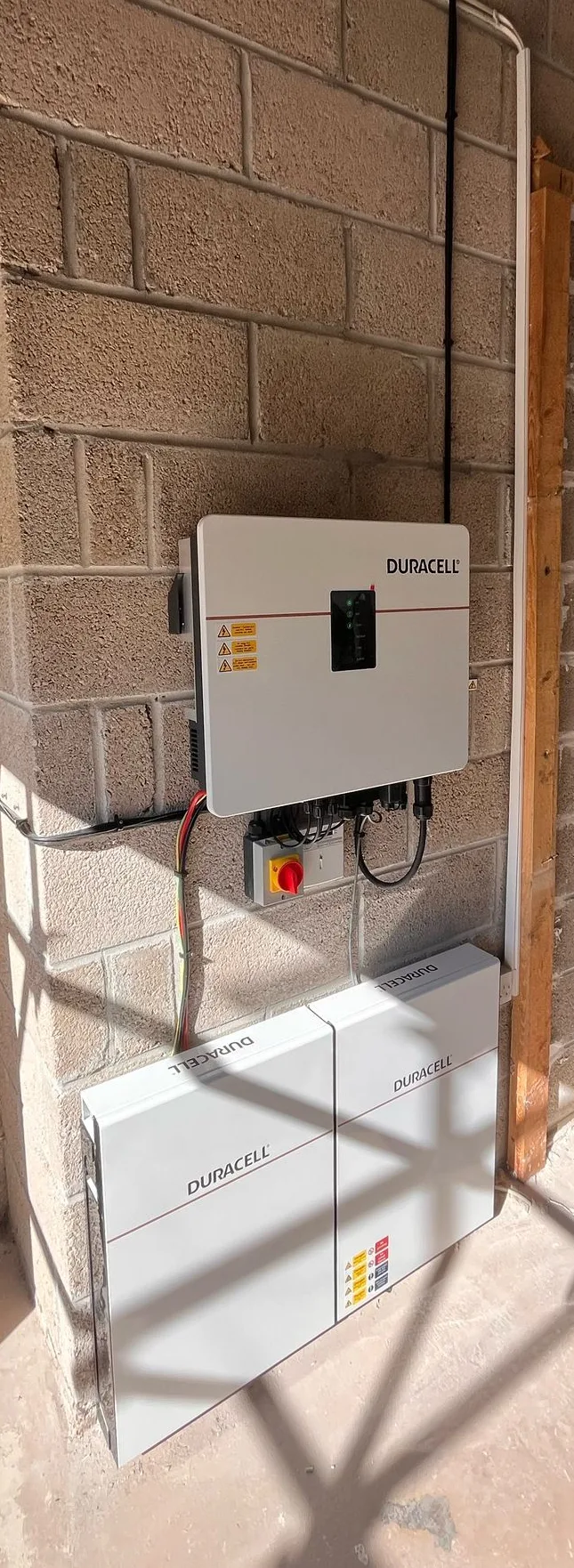
Battery Storage
Bank what your panels make during the day and draw on it once the sun’s gone down.
Learn more →
Get your solar panel quote.
Takes about two minutes to request.
Free, no-obligation quote from your local MCS-certified installer, takes less than a minute. No spam, no cold-calling list sale.